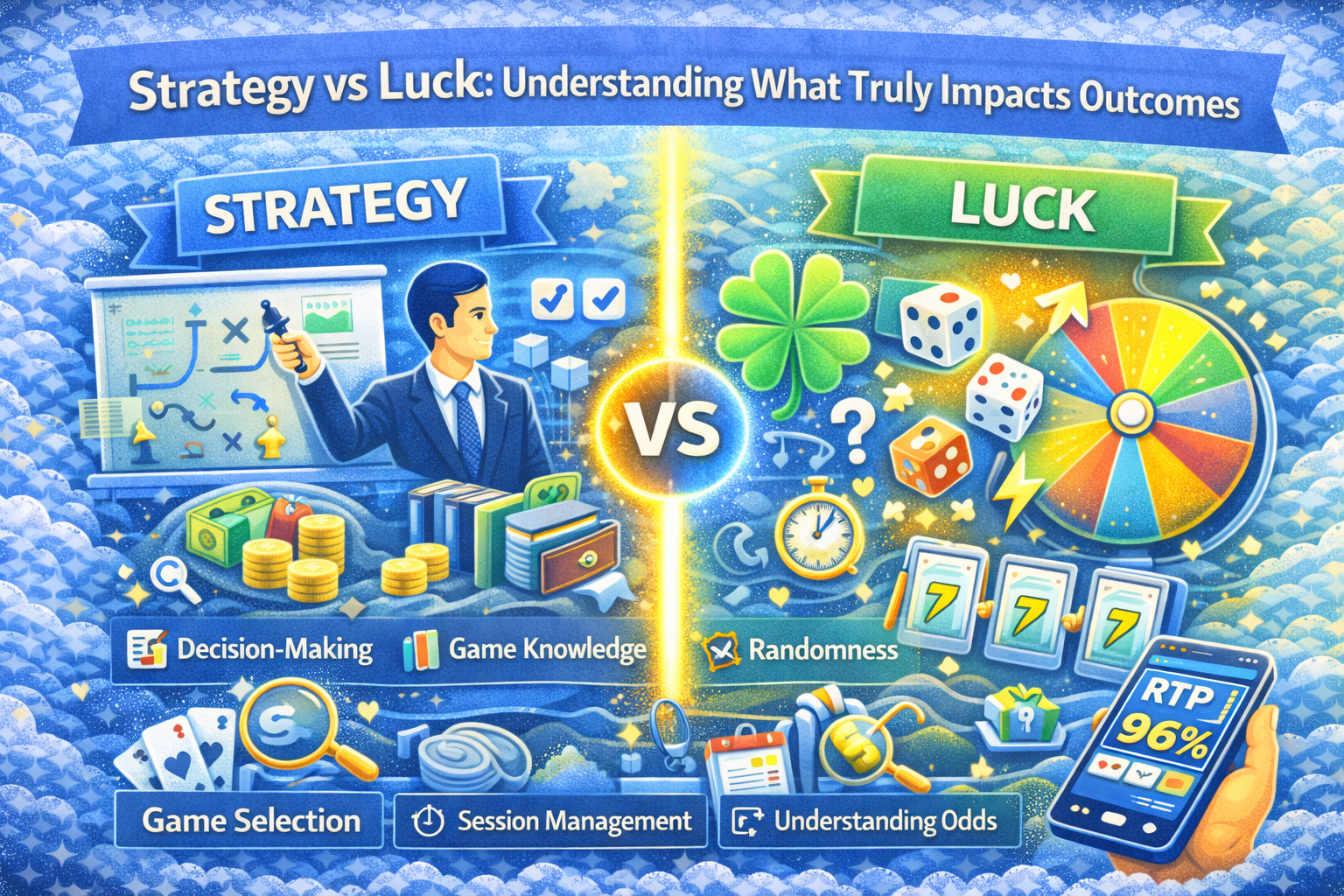
Strategy vs Luck: Understanding What Truly Impacts Outcomes
One of the most common questions in digital gaming is whether outcomes are driven more by strategy or luck. While both elements play a role, understanding how they interact is essential for making informed decisions and setting realistic expectations.
In 2026, as platforms become more advanced and transparent, players are better equipped to understand the mechanics behind gameplay.
The Role of Luck in Gaming
Luck is a fundamental component of many digital games. Randomness ensures unpredictability, which keeps gameplay engaging and fair over time.
Most games rely on systems designed to produce random outcomes, ensuring that no single result can be predicted with certainty.
The Role of Strategy
Decision-Making
Strategy involves making informed choices based on available information. This can include selecting games, managing time, or choosing when to stop.
Understanding Game Mechanics
Knowing how a game works—such as its rules, features, and structure—can influence how players approach it.
Managing Resources
Strategic planning includes setting limits and managing sessions effectively.
Where Strategy Has the Most Impact
Game Selection
Choosing games that align with personal preferences and risk tolerance can improve the overall experience.
Session Management
Setting time and budget limits helps maintain control and prevents over commitment.
Understanding Odds and Mechanics
Players who understand key concepts such as RTP and volatility are better prepared to make informed decisions.
Where Luck Plays a Bigger Role
Outcome Variability
Individual results are largely influenced by randomness, especially in short sessions.
Short-Term Results
Luck tends to have a stronger impact over shorter periods, while long-term outcomes align more closely with game design.
Balancing Strategy and Luck
Rather than viewing strategy and luck as opposing forces, it is more accurate to see them as complementary elements.
Strategy helps players make better decisions, while luck determines the outcome of those decisions.
Common Misconceptions
“Strategy Can Eliminate Luck”
No strategy can remove randomness from games designed with unpredictable outcomes.
“Luck Alone Determines Everything”
While luck influences outcomes, strategy plays a role in how players approach and manage their sessions.
“Patterns Can Predict Outcomes”
Random systems are designed to prevent predictable patterns, making past results unreliable indicators of future outcomes.
Psychological Factors in Decision-Making
Perception of Control
Players may feel they have more control than they actually do, which can influence decision-making.
Emotional Responses
Emotions can affect how players react to outcomes, sometimes leading to impulsive decisions.
Building a Smarter Approach
Focus on What You Can Control
Players cannot control outcomes, but they can control their decisions, limits, and behavior.
Stay Informed
Understanding game mechanics helps create a more structured approach.
Maintain Balance
Combining knowledge with realistic expectations leads to a better overall experience.
Understanding the Bigger Picture
Strategy and luck are both integral parts of digital gaming. While luck determines individual outcomes, strategy shapes how players interact with the experience.
By recognizing this balance, players can approach gaming with greater clarity, confidence, and control, making decisions that align with their preferences and goals.