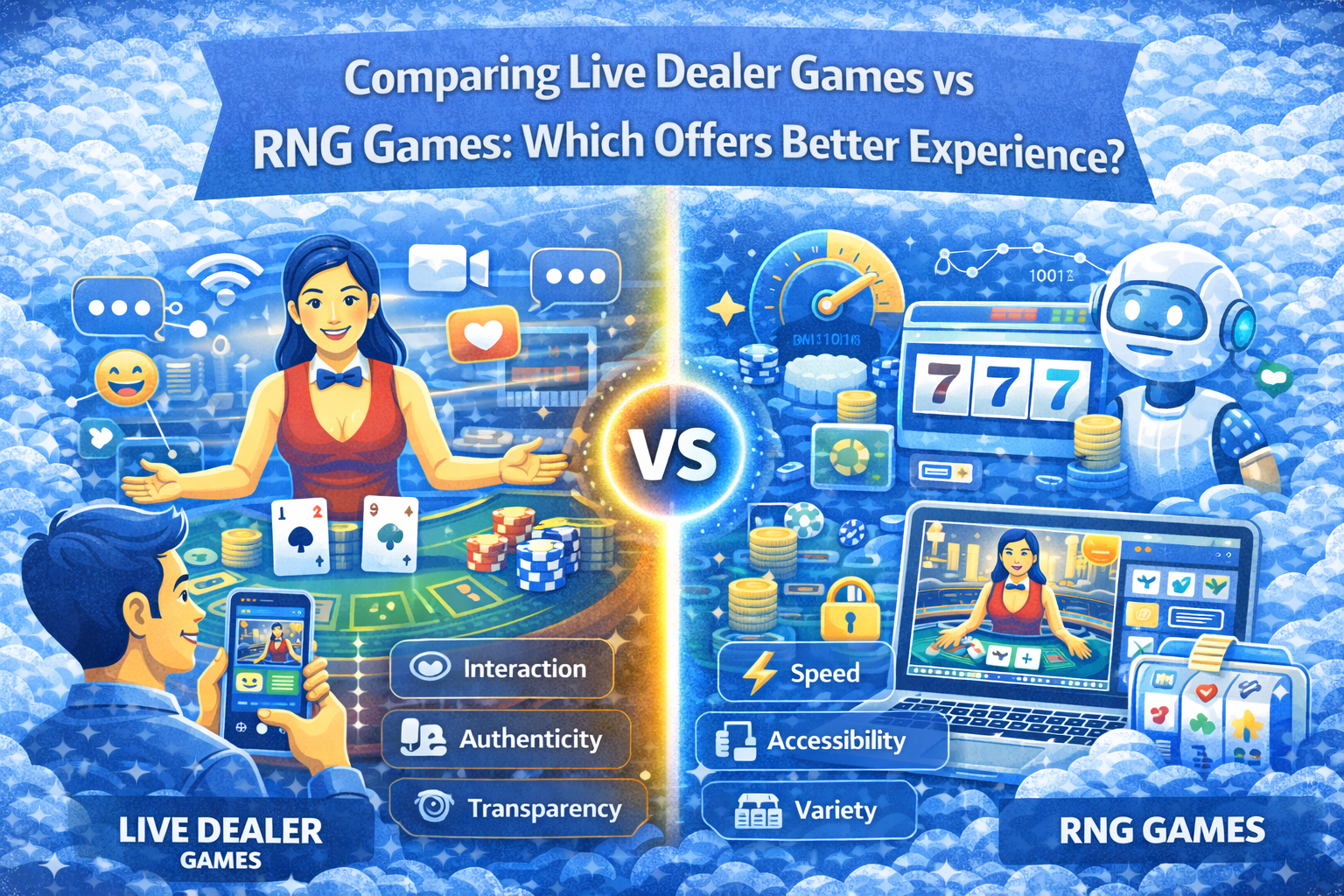
Comparing Live Dealer Games vs RNG Games: Which Offers Better Experience?
As digital gaming continues to evolve, players are presented with a wide variety of formats. Two of the most prominent options are live dealer games and RNG (Random Number Generator) games. While both serve the same core purpose, they deliver fundamentally different experiences.
Understanding the differences between these formats helps users choose the option that best aligns with their preferences and expectations.
What Are Live Dealer Games?
Live dealer games are powered by real-time video streaming, where human dealers host the game from a studio environment. Players interact with the game through a digital interface while watching events unfold live.
This format combines elements of traditional gaming with modern technology, creating a more immersive experience.
What Are RNG Games?
RNG games rely on algorithms to generate random outcomes. These systems are designed to ensure fairness and unpredictability without the need for human involvement.
RNG technology is widely used across digital platforms and is supported by testing and certification processes.
Technical explanations from Cloudflare describe how RNG systems produce random and unbiased results.
Key Differences Between Live Dealer and RNG Games
Interaction and Engagement
Live dealer games offer real-time interaction, allowing players to engage with dealers and other participants. RNG games, on the other hand, are fully automated and lack social elements.
Speed of Gameplay
RNG games typically operate at a faster pace, as there are no delays associated with live streaming or human interaction. Live dealer games follow a natural pace, which may feel more relaxed.
Level of Immersion
Live dealer games provide a more immersive environment through video streaming and real-world elements. RNG games focus on efficiency and simplicity.
Advantages of Live Dealer Games
Authentic Experience
The presence of real dealers and live environments creates a sense of authenticity.
Social Interaction
Players can interact with others, adding a social dimension to the experience.
Transparency
Seeing actions happen in real time can enhance trust and confidence.
Advantages of RNG Games
Faster Gameplay
Players can complete sessions quickly without waiting for live interactions.
Accessibility
RNG games require less bandwidth and are easier to access on various devices.
Wide Variety
There is a broader range of RNG-based games available, offering diverse experiences.
Factors to Consider When Choosing
Personal Preferences
Players who value interaction and realism may prefer live dealer games, while those who prioritize speed and convenience may choose RNG games.
Technical Requirements
Live dealer games require stable internet connections, whereas RNG games are less demanding.
Time Commitment
RNG games are suitable for shorter sessions, while live dealer games may involve longer engagement.
Security and Fairness
Both formats rely on different mechanisms to ensure fairness. RNG systems are tested for randomness, while live dealer games provide transparency through real-time video.
The Future of Hybrid Experiences
Platforms are increasingly exploring hybrid models that combine elements of both live dealer and RNG games. These innovations aim to deliver the best of both worlds—interaction and efficiency.
As technology continues to evolve, the distinction between these formats may become less pronounced.
Choosing the Experience That Fits You
There is no single “better” option between live dealer and RNG games. Each format offers unique advantages that cater to different user preferences.
By understanding their differences, players can make informed choices that align with their desired experience, whether it is immersive interaction or fast-paced gameplay.