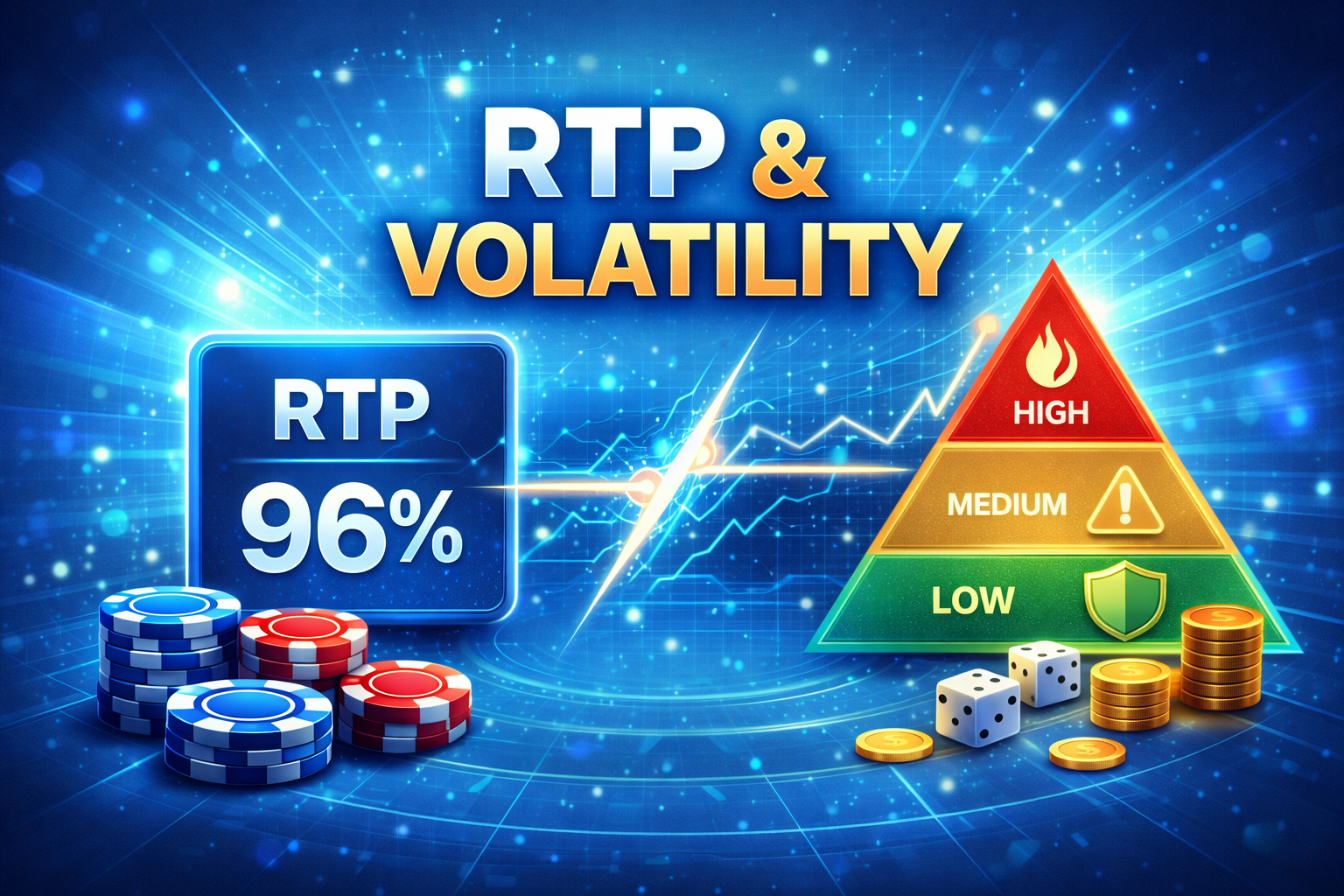
Understanding RTP and Volatility: How to Choose the Right Game
Choosing the right game is one of the most important decisions any player can make. While visuals, themes, and features may attract attention, experienced players often look deeper — focusing on key concepts such as RTP (Return to Player) and volatility.
Understanding these two factors can help you align your gaming choices with your personal preferences, whether you enjoy steady gameplay or high-risk, high-reward experiences.
What is RTP (Return to Player)?
RTP, or Return to Player, is a percentage that represents the average amount a game is expected to return to players over time. It is calculated based on long-term play rather than short sessions.
Example
If a game has an RTP of 96%, it means that, on average, players may receive $96 back for every $100 wagered over an extended period.
It is important to remember that RTP does not guarantee individual results. It reflects statistical averages across thousands or even millions of rounds.
Why RTP Matters
RTP provides insight into how a game is structured. Games with higher RTP percentages generally offer better long-term value.
- Higher RTP (96% and above): More balanced returns over time
- Medium RTP (94% – 96%): Standard gameplay experience
- Lower RTP (below 94%): Higher risk over extended play
Players who prioritize longer sessions often prefer games with higher RTP.
What is Volatility?
Volatility, also known as variance, refers to the level of risk associated with a game. It determines how often and how much a game pays out.
Types of Volatility
- Low Volatility: Frequent but smaller wins
- Medium Volatility: Balanced frequency and payout size
- High Volatility: Less frequent wins but potentially larger payouts
Volatility directly affects your gameplay experience and should match your risk tolerance.
RTP vs Volatility: Key Differences
Although RTP and volatility are often mentioned together, they measure different aspects of a game.
- RTP focuses on long-term expected returns
- Volatility focuses on short-term risk and payout patterns
A game can have high RTP but also high volatility, meaning it offers good long-term value but may require patience during gameplay.
Choosing the Right Game for Your Style
Your ideal game depends on your preferences, goals, and playing style.
If You Prefer Steady Gameplay
- Look for high RTP games
- Choose low to medium volatility
- Focus on longer play sessions
If You Enjoy Big Wins Potential
- Consider medium to high volatility games
- Be prepared for longer gaps between wins
- Manage your bankroll carefully
If You Are a Beginner
- Start with medium volatility games
- Learn how different games behave
- Gradually explore other options
Common Misconceptions
High RTP Guarantees Wins
RTP reflects long-term averages, not short-term outcomes. Individual sessions can vary significantly.
Low Volatility Means No Risk
While lower volatility reduces swings, it does not eliminate risk entirely.
All Games with Similar RTP Behave the Same
Two games with identical RTP can feel very different due to volatility and gameplay mechanics.
Combining RTP and Volatility with Strategy
Understanding these concepts allows you to make more informed decisions. When combined with proper bankroll management and discipline, they can enhance your overall experience.
- Match your game choice with your risk tolerance
- Avoid switching games impulsively
- Stay consistent with your strategy
Making Smarter Choices
Instead of choosing games based purely on visuals or trends, focusing on RTP and volatility gives you a more structured approach.
By understanding how each factor influences gameplay, you can select games that align with your expectations and enjoy a more balanced and controlled experience.
With the right knowledge, every session becomes an opportunity to play smarter and stay in control.