Common Mistakes New Players Make and How to Avoid Them
Starting out in digital gaming can be exciting, but it also comes with a learning curve. Many new players make avoidable mistakes that can affect their overall experience and decision-making.
Understanding these common pitfalls—and how to avoid them—can help users approach gaming with greater confidence, control, and awareness.
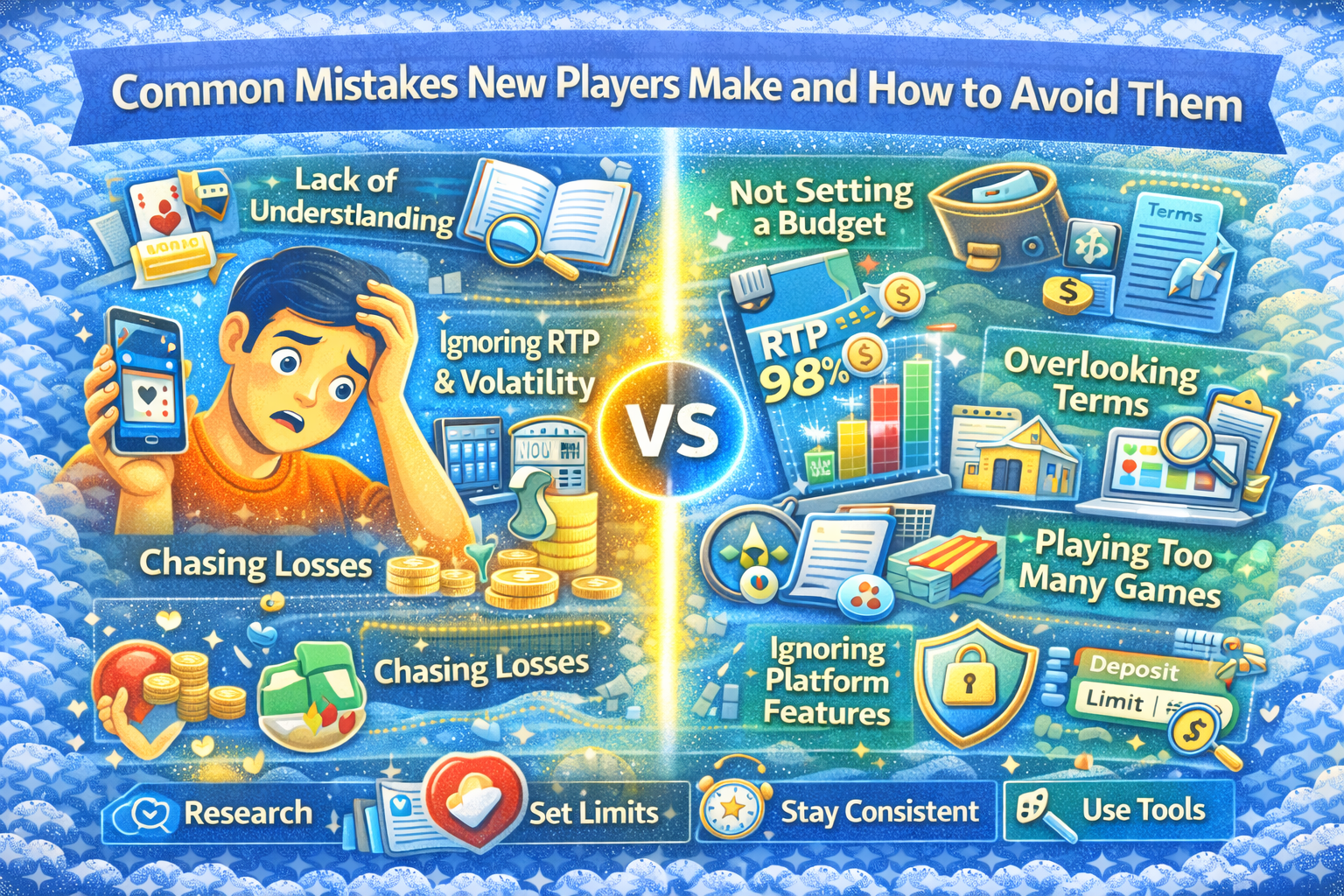
Lack of Understanding of Game Mechanics
One of the most frequent mistakes is jumping into games without fully understanding how they work. Each game has its own rules, features, and mechanics that influence gameplay.
Taking time to review game instructions or demo modes can significantly improve the experience.
Ignoring RTP and Volatility
New players often overlook key metrics such as RTP and volatility. These factors provide insight into how a game behaves over time.
Without this understanding, players may enter games with unrealistic expectations.
Chasing Losses
Emotional Decision-Making
Trying to recover losses quickly is a common mistake. Emotional reactions can lead to impulsive decisions that may worsen the situation.
Lack of Limits
Without predefined limits, it becomes easier to continue playing beyond intended boundaries.
Guidance from BeGambleAware emphasizes maintaining control and avoiding reactive behavior.
Not Setting a Budget
Failing to establish a clear budget is another common issue. Without financial boundaries, players may lose track of their spending.
Setting a budget before starting ensures better control and a more structured approach.
Overlooking Terms and Conditions
Promotions and bonuses often come with specific conditions. New players may accept offers without fully understanding the requirements.
Reviewing terms carefully helps prevent confusion and unmet expectations.
Playing Too Many Games at Once
Exploring multiple games simultaneously can be overwhelming. It becomes harder to track progress, understand mechanics, and make informed decisions.
Focusing on one or two games at a time allows for better understanding and control.
Ignoring Platform Features
Security Tools
Many platforms offer features such as two-factor authentication and activity tracking, which are often underutilized.
Responsible Gaming Tools
Tools like deposit limits and session reminders can help maintain balance.
Security best practices from CISA highlight the importance of protecting accounts and data.
Unrealistic Expectations
Expecting consistent positive outcomes can lead to disappointment. Digital games are designed with variability, and outcomes are not guaranteed.
Understanding this helps players approach gaming with a more balanced mindset.
How to Avoid These Mistakes
Start with Research
Learn the basics of each game before playing. This includes rules, features, and key metrics.
Set Clear Limits
Define both time and budget boundaries before starting a session.
Stay Consistent
Stick to a structured approach rather than making decisions based on emotions.
Use Available Tools
Take advantage of platform features designed to support safe and controlled participation.
Building Better Habits from the Start
Avoiding common mistakes is not about perfection—it is about awareness. By recognizing potential pitfalls early, new players can develop better habits and make more informed decisions.
This approach leads to a more enjoyable and controlled experience, helping players stay confident as they explore different games and features.