Beginner’s Guide to Choosing the Right Online Game for Your Style
With countless online games available today, choosing the right one can feel overwhelming—especially for beginners. Each game offers a different experience, pace, and level of complexity. Understanding how to match a game with your personal style is key to enjoying a more satisfying and controlled gaming journey.
This guide will help you identify your preferences and choose games that align with your goals, whether you prioritize entertainment, strategy, or balanced gameplay.
Understanding Your Player Profile
Before selecting a game, it’s important to understand what kind of player you are. Your preferences will influence the type of games that suit you best.
Casual Players
- Prefer simple mechanics and easy-to-understand gameplay
- Enjoy short, relaxed sessions
- Focus on entertainment rather than strategy
Strategic Players
- Enjoy thinking ahead and making calculated decisions
- Prefer games that involve skill and planning
- Willing to spend time learning mechanics
High-Risk Players
- Enjoy excitement and unpredictable outcomes
- Comfortable with higher levels of risk
- Prefer games with bigger potential rewards
Choosing Based on Game Complexity
Different games come with varying levels of complexity. Beginners are encouraged to start with simpler options before exploring more advanced gameplay.
- Low complexity: Easy to learn, minimal rules
- Medium complexity: Requires some understanding and practice
- High complexity: Involves strategy, multiple features, and deeper mechanics
Starting simple helps build confidence and understanding.
Matching Games with Your Risk Tolerance
Every player has a different comfort level when it comes to risk. Choosing games that match your tolerance helps create a more enjoyable experience.
Low Risk Preference
- Look for consistent gameplay
- Prefer steady, smaller outcomes
Medium Risk Preference
- Balanced gameplay with moderate fluctuations
- Mix of consistency and excitement
High Risk Preference
- Higher volatility games
- Less frequent but potentially larger outcomes
Exploring Game Types
Understanding different categories can help narrow down your choices.
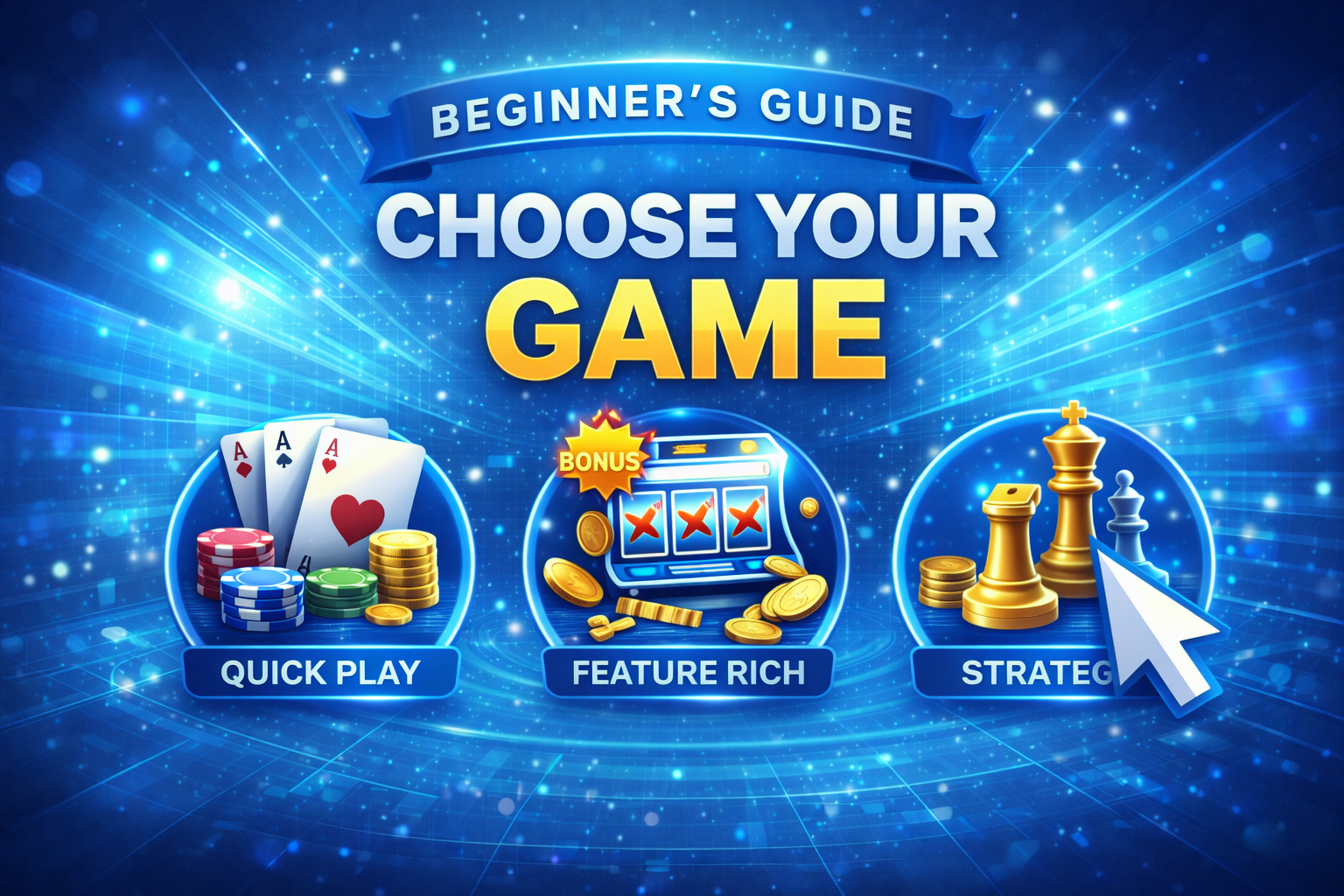
Quick-Play Games
- Fast-paced and easy to access
- Ideal for short sessions
Strategy-Based Games
- Require planning and decision-making
- Suitable for players who enjoy control and depth
Feature-Rich Games
- Include bonus features and advanced mechanics
- Offer more variety and engagement
Trying Before Committing
Many platforms offer demo or practice modes. These allow you to explore different games without pressure.
- Test different game types
- Observe how each game behaves
- Find what feels comfortable and enjoyable
This step is especially useful for beginners who are still discovering their preferences.
Setting Expectations
Choosing the right game also means having realistic expectations. No single game guarantees outcomes, and experiences can vary.
- Focus on enjoyment rather than results
- Avoid comparing your experience with others
- Understand that every session is different
Common Mistakes to Avoid
- Choosing games based solely on trends
- Switching games too frequently
- Ignoring your own preferences
Staying consistent with your choices often leads to a better overall experience.
Building Confidence Over Time
As you gain experience, your understanding of different games will improve. You may begin to explore more advanced options and refine your preferences.
The key is to start with what suits you now and evolve gradually.
Finding What Works for You
There is no one-size-fits-all approach when it comes to choosing the right game. Your style, preferences, and comfort level should guide your decisions.
By understanding your player profile, risk tolerance, and gameplay preferences, you can make more informed choices and enjoy a more personalized gaming experience.
Take your time, explore different options, and most importantly, focus on what makes your experience enjoyable and sustainable.