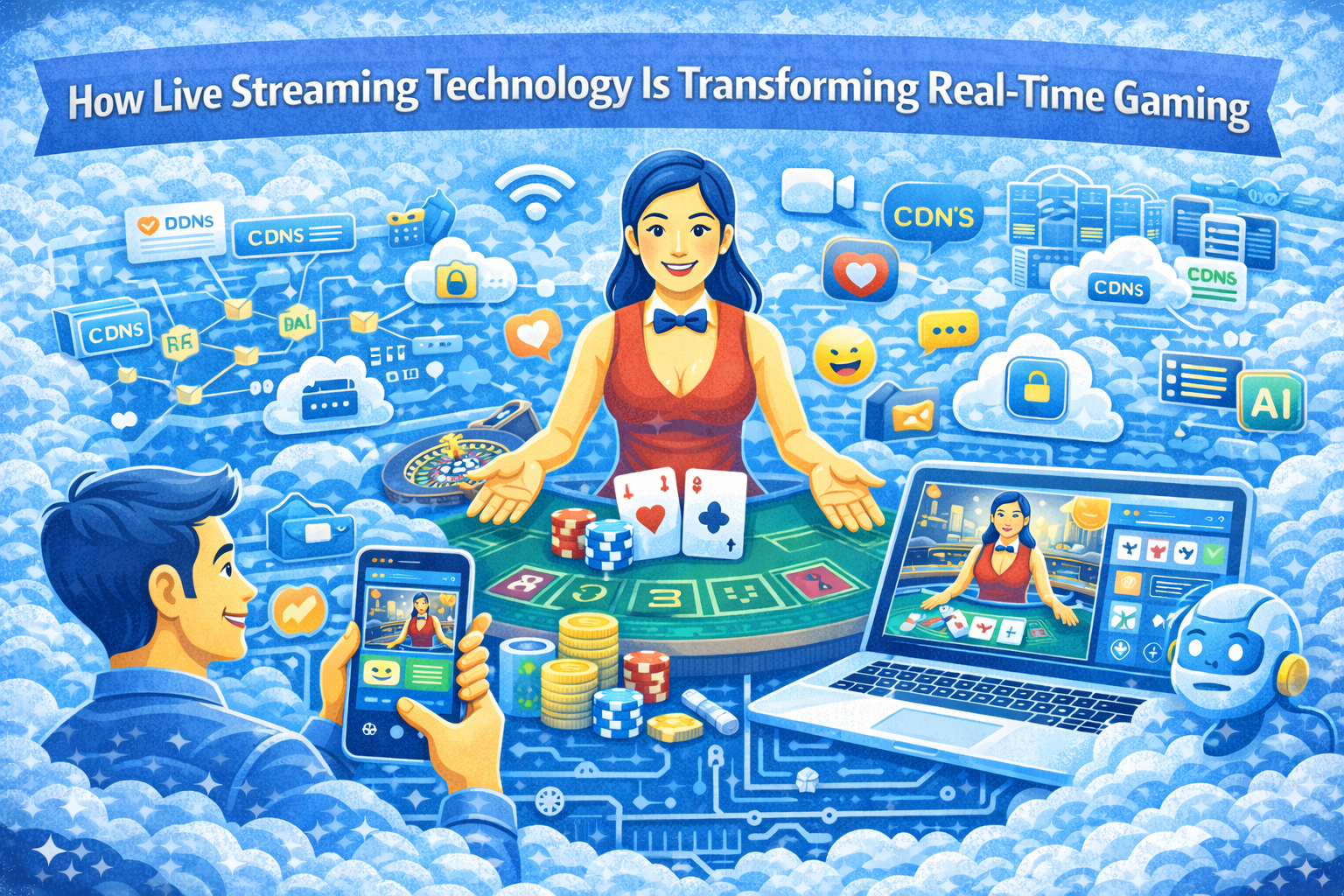
Live streaming technology has become the backbone of real-time gaming experiences. In 2026, advancements in streaming infrastructure are enabling smoother, faster, and more immersive interactions between platforms and users.
This transformation is not just about visual quality—it is about delivering a seamless and responsive environment that enhances engagement and trust.
The Evolution of Live Streaming in Gaming
Early live streaming systems faced limitations such as buffering, low resolution, and delayed interactions. Today, modern platforms leverage high-speed networks and optimized streaming protocols to deliver near-instant experiences.
This evolution has significantly improved the quality and reliability of live dealer games.
Key Technologies Driving Change
High-Definition Video Streaming
Platforms now offer full HD and even 4K streaming, providing clear visuals that enhance realism and immersion.
Low Latency Streaming
Reduced delay between user actions and system responses ensures smoother gameplay and better interaction.
Adaptive Bitrate Technology
Streaming quality automatically adjusts based on internet speed, ensuring a stable experience even in fluctuating network conditions.
Technical insights from web.dev video performance highlight how optimized streaming improves user satisfaction.
Enhancing User Interaction
Real-Time Communication
Live chat and instant feedback features allow users to interact with dealers and other participants.
Multi-Angle Viewing
Some platforms provide multiple camera angles, giving users greater control over how they view the experience.
Interactive Controls
Users can engage directly with the interface, making decisions in real time without noticeable delay.
Impact on User Experience
Greater Immersion
High-quality streaming creates a more realistic environment, making users feel more connected to the experience.
Improved Trust
Clear visuals and real-time interaction enhance transparency, allowing users to see processes unfold live.
Higher Engagement Levels
Smooth and responsive streaming encourages longer sessions and repeat participation.
Infrastructure Behind Live Streaming
Content Delivery Networks (CDNs)
CDNs distribute content across multiple servers, reducing latency and improving load times.
Edge Computing
Processing data closer to the user reduces delays and enhances responsiveness.
Cloud Integration
Cloud systems enable scalable and reliable streaming services.
Cloud infrastructure insights from Cloudflare explain how distributed networks improve performance.
Challenges in Live Streaming
Network Dependency
Streaming quality depends heavily on internet stability, which can vary across regions.
Latency Management
Even small delays can impact real-time interaction, making latency reduction a constant priority.
Bandwidth Consumption
High-quality video requires significant data usage, which may affect accessibility for some users.
Security and Streaming
Secure streaming is essential to protect both user data and platform integrity. Encryption and secure transmission protocols are widely used to safeguard live interactions.
Future Developments in Live Streaming
AI-Enhanced Streaming
Artificial intelligence can optimize video quality and predict network conditions to improve performance.
Immersive Technologies
Virtual and augmented reality may further enhance live experiences, making them more interactive.
Ultra-Low Latency Networks
Advancements in network technology will continue to reduce delays and improve responsiveness.
Delivering Seamless Real-Time Experiences
Live streaming technology has redefined how users interact with digital gaming platforms. By focusing on speed, clarity, and reliability, platforms can create engaging experiences that feel immediate and authentic.
As technology continues to advance, live streaming will remain a key driver of innovation, shaping the future of real-time gaming experiences.