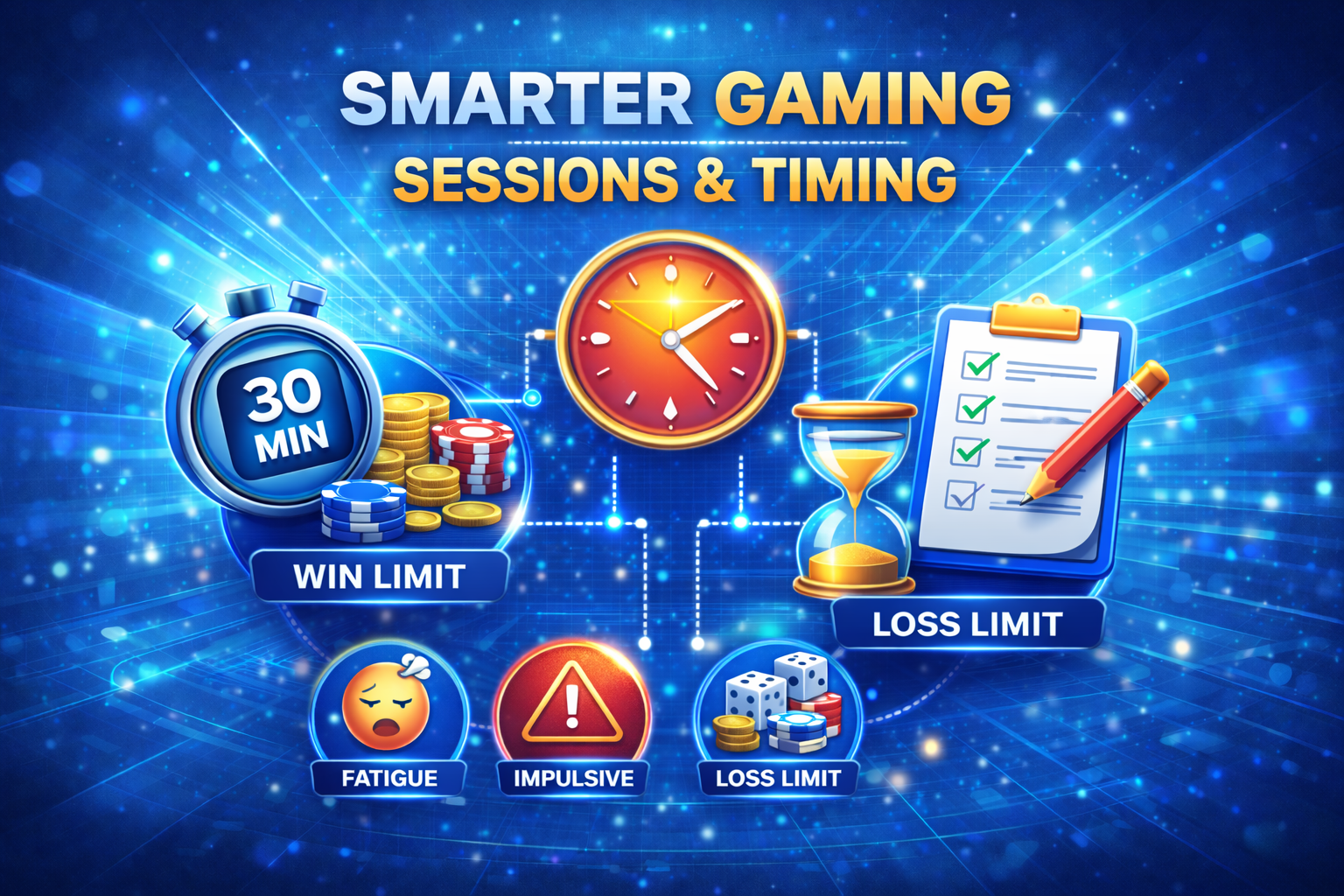
Understanding session control helps you stay focused, avoid fatigue, and make better decisions throughout your gameplay.
What Is a Game Session?
A game session refers to a continuous period of gameplay. It can range from a few minutes to several hours, depending on the player.
Managing session length is important because longer sessions often lead to reduced focus and increased risk of poor decision-making.
Why Timing Matters
Your mental state plays a crucial role in how you perform during a session. Playing when you are tired, distracted, or stressed can negatively impact your decisions.
- Better focus leads to better decisions
- Short sessions reduce fatigue
- Controlled timing improves discipline
Choosing the right time to play can make a noticeable difference in your experience.
Ideal Session Length
There is no fixed rule, but shorter sessions are generally more effective.
- Beginner: 20–40 minutes per session
- Intermediate: 30–60 minutes per session
- Experienced: Up to 90 minutes with breaks
Taking breaks between sessions helps reset your mindset and maintain focus.
Signs You Should End a Session
Knowing when to stop is just as important as knowing when to start.
- You feel tired or distracted
- You start making impulsive decisions
- You ignore your original plan
- You reach your win or loss limits
Recognizing these signs early can prevent unnecessary losses and frustration.
Planning Your Sessions
Structured sessions help create consistency and discipline.
- Decide your session length in advance
- Set clear goals for each session
- Prepare your mindset before starting
Planning removes uncertainty and helps you stay in control.
Avoiding Marathon Sessions
Long, continuous gameplay sessions often lead to fatigue and reduced awareness.
- Take breaks every 30–60 minutes
- Step away from the screen regularly
- Avoid playing for extended hours without rest
Shorter sessions with breaks are more effective than long, uninterrupted play.
Combining Timing with Strategy
Session timing works best when combined with other strategies such as bankroll management and limit setting.
- Start sessions with a clear plan
- Stick to your time and budget limits
- Review your session after finishing
This combination creates a more structured and controlled approach.
Building Consistent Habits
Over time, managing your sessions becomes a habit. Players who control their timing often experience better focus and more enjoyable gameplay.
Consistency is key — not just in strategy, but also in how you approach each session.
Play with Awareness and Control
Understanding game sessions and timing gives you an extra layer of control over your gameplay. It helps you stay disciplined, focused, and aware of your decisions.
By managing your time effectively, you can create a more balanced, structured, and enjoyable gaming experience every time you play.