How to Choose the Right Game Based on Your Playing Style
Choosing the right game is one of the most important decisions a player can make. With so many options available, understanding your personal playing style can help narrow down choices and improve overall satisfaction.
In 2026, gaming platforms offer a wide variety of formats, features, and mechanics. Selecting the right game is less about finding the “best” option and more about finding what fits your preferences.
Understanding Your Playing Style
Every player approaches games differently. Some prefer fast-paced experiences, while others enjoy slower, more immersive sessions. Identifying your playing style is the first step toward making better choices.
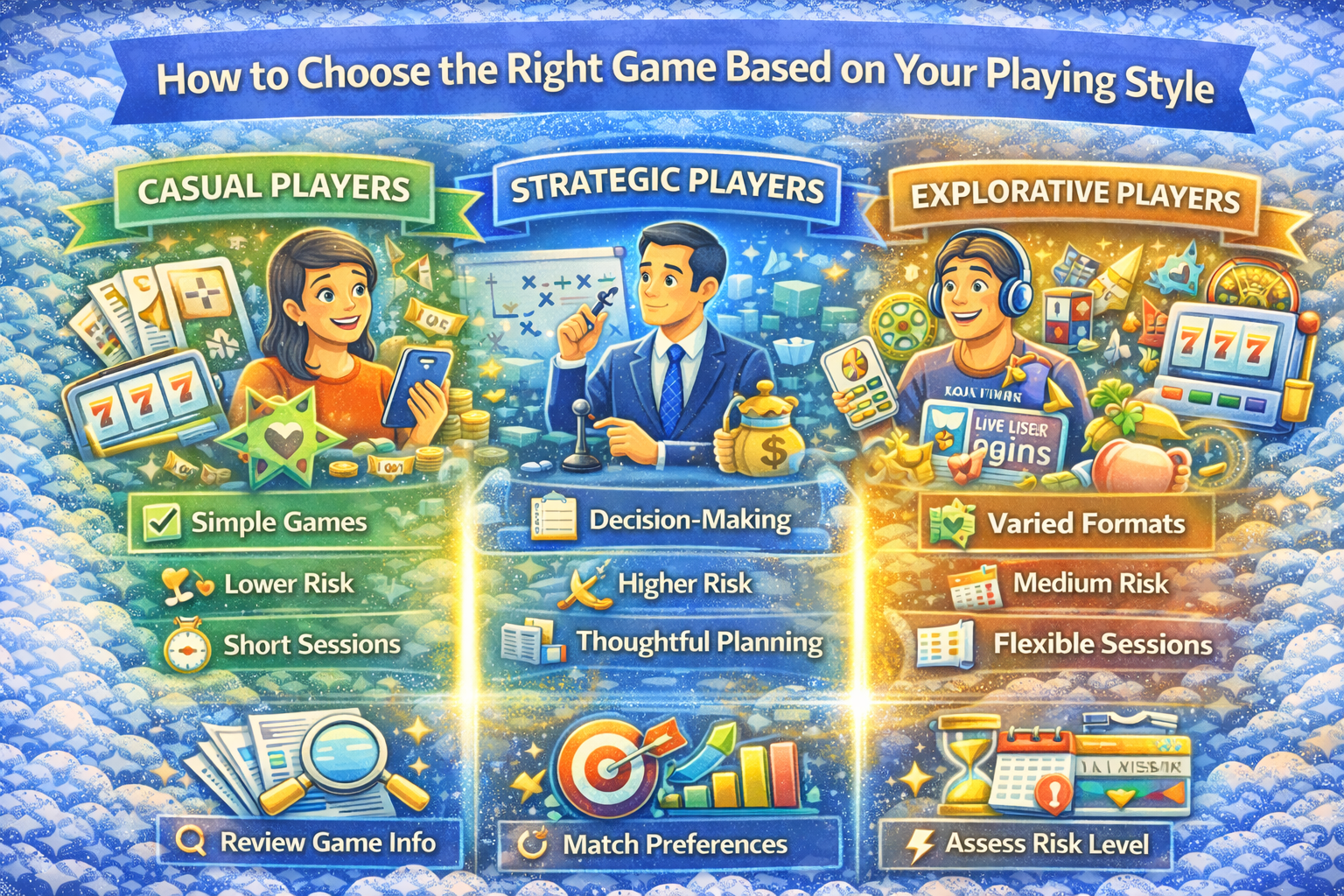
Casual Players
Casual players often look for simple, easy-to-understand games that do not require a steep learning curve.
Strategic Players
Strategic players prefer games that involve decision-making and planning.
Explorative Players
These players enjoy trying different games and discovering new features.
Key Factors to Consider
Game Complexity
Some games are straightforward, while others involve multiple layers of rules and features. Choosing a level of complexity that matches your comfort is important.
Session Length
Short sessions may suit players with limited time, while longer sessions may appeal to those seeking deeper engagement.
Risk Preference
Understanding your tolerance for variability helps in selecting games that align with your expectations.
Matching Games to Your Preferences
For Consistent Experiences
Players who prefer steady gameplay may choose options with lower volatility and predictable pacing.
For High Engagement
Interactive formats, such as live dealer games, offer real-time participation and social elements.
For Variety Seekers
Platforms with a wide range of game types allow users to explore different experiences.
Using Game Information Effectively
Most platforms provide detailed information about each game, including rules, features, and performance metrics. Reviewing this information helps players make informed decisions.
The Role of User Experience
Interface Design
A clear and intuitive interface enhances usability and enjoyment.
Accessibility
Games that perform well across devices provide greater flexibility.
Personalization
Modern platforms often recommend games based on user behavior, making it easier to find suitable options.
Common Mistakes to Avoid
Following Trends Blindly
Popular games may not always align with your preferences.
Ignoring Game Details
Skipping important information can lead to mismatched expectations.
Switching Too Frequently
Constantly changing games can make it difficult to fully understand any one experience.
Balancing Exploration and Consistency
While exploring new games can be enjoyable, maintaining some consistency helps build familiarity and confidence.
Finding the right balance allows players to enjoy variety without losing control or clarity.
Adapting Your Choices Over Time
Playing styles can evolve as users gain more experience. What works today may change as preferences develop.
Being open to adjusting your approach ensures that your gaming experience remains engaging and relevant.
Making Choices That Fit You
Choosing the right game is a personal decision. By understanding your playing style, preferences, and goals, you can make choices that enhance your overall experience.
Taking a thoughtful approach leads to more enjoyable sessions and a stronger sense of control, helping you get the most out of each interaction.