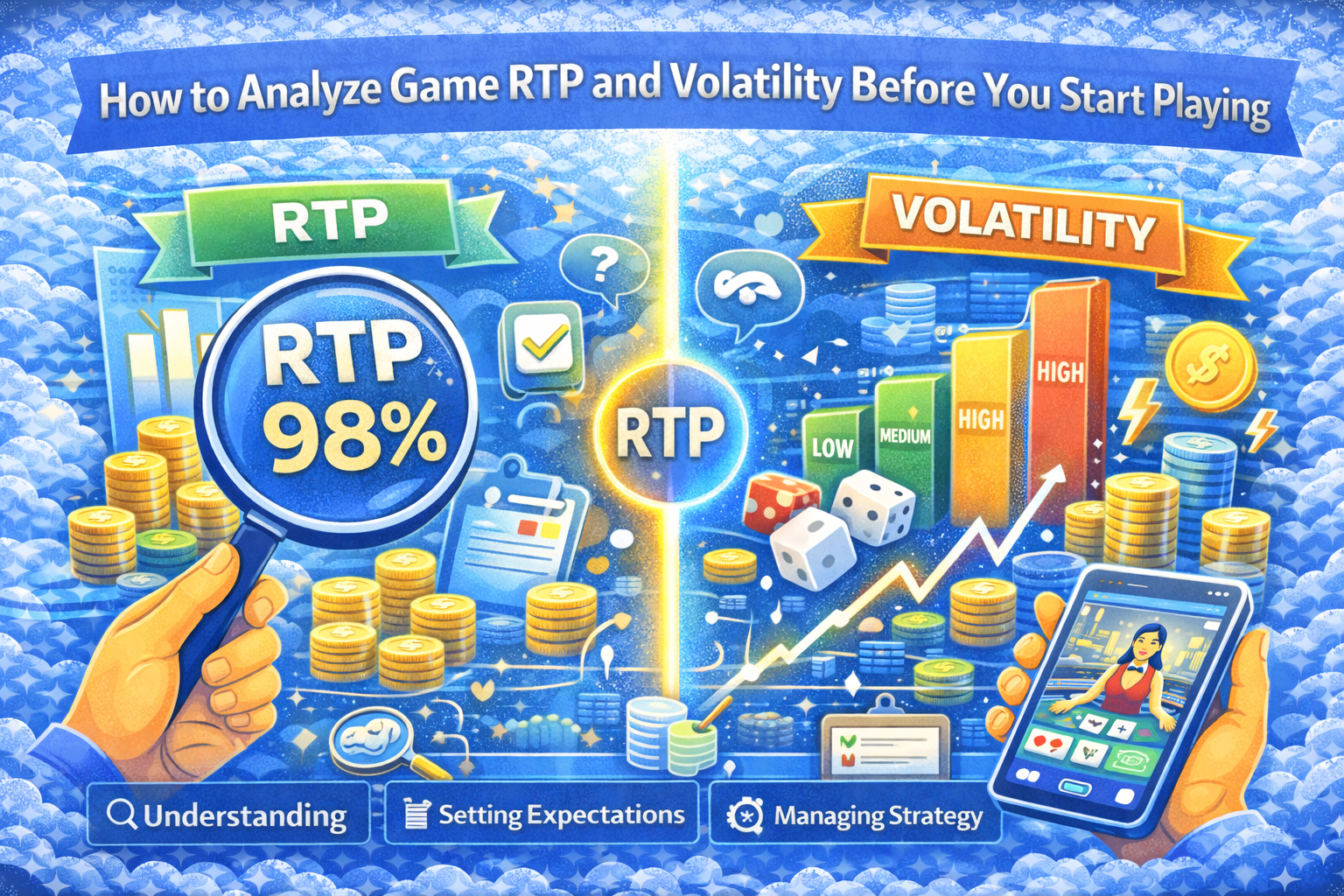
How to Analyze Game RTP and Volatility Before You Start Playing
Understanding key game mechanics is essential for making informed decisions in digital gaming. Two of the most important factors to consider are Return to Player (RTP) and volatility. These metrics help players evaluate how a game behaves over time and what kind of experience they can expect.
By learning how to analyze RTP and volatility, users can approach games with greater clarity and realistic expectations.
What Is RTP (Return to Player)?
RTP represents the percentage of total stakes that a game is designed to return to players over time. For example, a game with an RTP of 96% is expected to return 96 units for every 100 units played over the long term.
It is important to understand that RTP is calculated over many sessions and does not guarantee outcomes in individual gameplay.
Technical insights from Cloudflare highlight how system performance and randomness influence digital processes.
What Is Volatility?
Volatility, also known as variance, describes the level of risk associated with a game. It indicates how often and how much a player might win during gameplay.
Low Volatility
Games with low volatility tend to provide smaller but more frequent outcomes. These are often preferred by users who value consistency.
High Volatility
High volatility games may produce larger outcomes but less frequently. These require patience and a higher tolerance for risk.
Medium Volatility
Medium volatility offers a balance between frequency and potential outcomes.
How RTP and Volatility Work Together
RTP and volatility are interconnected. Two games may have the same RTP but very different volatility levels, resulting in different user experiences.
For example, one game may provide frequent small returns, while another offers rare but larger outcomes.
Why These Metrics Matter
Setting Expectations
Understanding RTP and volatility helps users set realistic expectations before starting.
Choosing the Right Game
Different players have different preferences. Some may prefer steady gameplay, while others enjoy higher-risk experiences.
Managing Time and Budget
These metrics can help users plan their sessions more effectively.
How to Evaluate RTP and Volatility
Check Game Information
Most platforms provide RTP and volatility details in the game description or help section.
Compare Multiple Games
Looking at different options helps identify which games align with your preferences.
Use Independent Resources
Educational platforms such as GamCare offer guidance on understanding gaming mechanics responsibly.
Common Misconceptions
“High RTP Means Guaranteed Returns”
RTP reflects long-term averages, not short-term results.
“Low Volatility Means No Risk”
All games involve variability, regardless of volatility level.
“Volatility Is Better When Higher”
The best volatility depends on individual preferences and goals.
Balancing Strategy and Enjoyment
While RTP and volatility are useful tools, they should not be the only factors considered. Enjoyment, game features, and user experience also play important roles.
A balanced approach ensures that decisions are both informed and aligned with personal preferences.
Making Smarter Choices Before You Play
Analyzing RTP and volatility provides valuable insight into how games function. By understanding these metrics, users can make more informed decisions and approach gameplay with confidence.
Taking the time to evaluate these factors leads to a more structured and enjoyable experience, helping users stay in control while exploring different options.